
Read time: 3 minutes
Highlights
AI is building a secondary retail leaderboard that ranks brands by machine legibility rather than shelf sales.
- The signal: Chobani ranks 12th in US packaged-food e-commerce sales but 6th in AI referrals, thanks to machine-legible product data.
- The momentum: AI-driven referrals to retail websites grew 304 percent in 2025, against 40 percent for other referral sources.
- The playbook: Solve a clear consumer problem, structure product data for machines and track AI referrals as their own metric.
- A signal: Packaged food is still a low-AI-traffic category, but this is a signal of change.
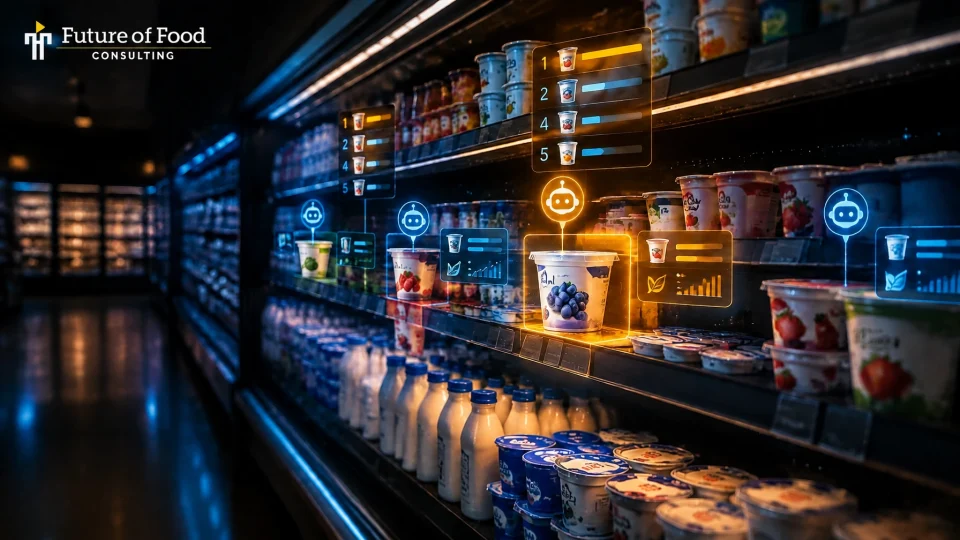
AI referrals are creating a second retail leaderboard, and Chobani is already climbing it. It’s a signal that shows how AI is shaping the shopping trip before a customer reaches a store.
Euromonitor data puts Chobani at 12th in US packaged-food e-commerce sales, but 6th in AI referrals. Its products are machine-legible on attributes AI assistants can interpret and match to consumer needs, including protein, dairy-free options and dietary requirements. That can make Chobani easier to recommend than rivals with higher online sales.
And this leaderboard looks to be growing quickly. Euromonitor reported that AI-driven referrals to retail websites rose 304 percent in 2025, compared with 40 percent growth from other referral sources. That’s a striking gap. It suggests AI is becoming a distribution channel, not just another tool for marketing teams.
Here’s the shift food companies need to notice. A shopper might ask an assistant for a high-protein breakfast that fits a dietary need. If the product information clearly describes what it offers and who it suits, the assistant can include it in a recommendation. If that information is incomplete or difficult for software to interpret, the product may never make the shortlist.
I’ve covered the restaurant-side precedent with machine-readable menus; this is the supermarket version arriving. I also explored what happens when AI agents take over the whole shopping trip in my piece on agentic shopping and the end of the supermarket. This signal is a fresh piece of evidence for that argument. If agents build the basket, the brands that get shortlisted won’t be chosen by shelf position. They’ll be chosen by legibility, exactly as Chobani’s ranking shows.
The emerging playbook is practical. Identify the consumer problem your product solves, structure product data so machines can read it, connect products to clear outcomes and occasions, and track AI-driven referrals separately from other traffic. The brands that prepare now may find that AI referrals become an important measure of discoverability, alongside shelf position and e-commerce sales.
There’s an important caveat. Packaged food is still a low-AI-traffic category. Euromonitor notes that snacks, dairy and drinks remain largely untouched compared with beauty and personal care. This is a leading indicator, not a flood of shoppers arriving through AI.
That’s exactly why companies should pay attention now. In the future, the brands winning AI recommendations may not be the biggest advertisers. They may be the brands publishing the clearest, most useful product data. Chobani gives us an early glimpse of a secondary retail leaderboard taking shape.
For more on the data behind this signal, read FoodNavigator’s report on Chobani’s AI referrals.
Just think about this for a minute. If an assistant shapes the shortlist before the shopper reaches the aisle, is your brand ready to be understood and recommended?
To continue the conversation email me at tony@futuristforfood.com
